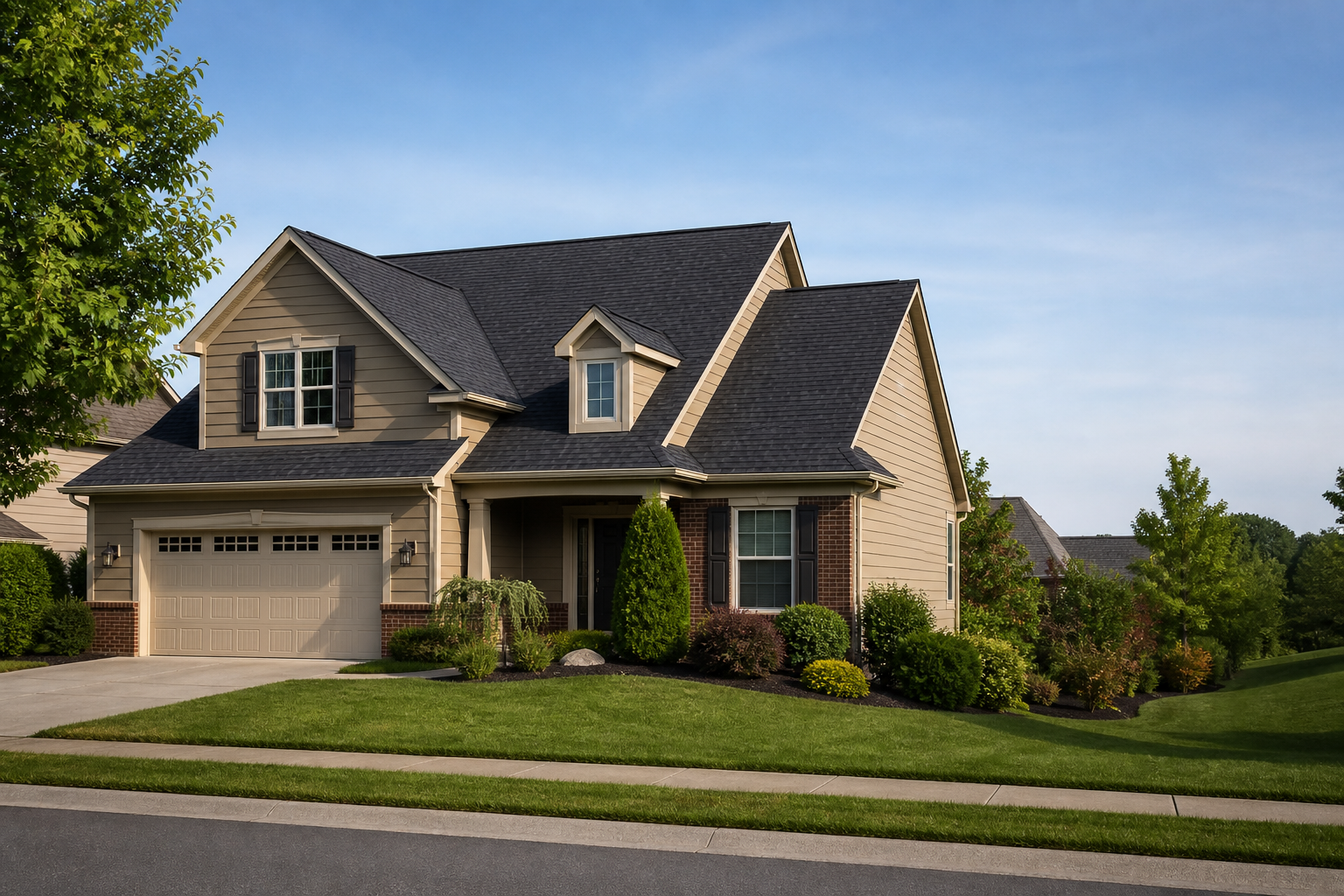
Exterior painting in a humid climate
Clarksville summers run humid for months, and paint applied over damp wood, chalky old paint or mildew fails early. Exterior prep means pressure washing, letting the surface dry fully, scraping and sanding loose paint, treating mildew, caulking gaps and priming bare wood.
We paint exteriors in the drier windows of spring and autumn wherever the schedule allows, avoiding days when rain is forecast within twenty-four hours or the dew point is high enough to leave the siding wet at dawn.
Interior painting
Interior work starts with filling nail holes, sanding, caulking trim gaps and spot-priming stains. Ceilings are painted first, then walls, then trim, with the trim cut in by hand rather than taped where a straight line matters.
Bathrooms and kitchens get a moisture-resistant paint with a mildewcide. High-traffic hallways and kids' rooms get a scrubbable finish. Choosing the sheen for the room is a bigger factor in how the paint looks and wears than most people expect.
Brick, siding and trim
Painting brick is permanent and worth thinking about, because it cannot be undone and needs a breathable masonry paint so moisture in the brick can escape. Vinyl siding can be painted in a colour no darker than the original, since dark paint absorbs heat and warps the panels. Fibre cement siding takes paint well and holds it for years.
Trim, fascia and soffits are where rot hides, and we replace soft wood before painting rather than painting over it.
Colour and finish selection
We supply sample pots and paint test patches on the actual wall, because a colour in a fan deck looks different under Tennessee afternoon light. Two or three patches, viewed morning and evening, settle most decisions.
Paint as part of a larger job
After drywall repair, a roof leak fix or a remodel, painting is the last step and the one that makes the job look finished. We schedule it after all dusty work is done and the room has been cleaned, and we protect new floors with drop cloths and rosin paper.
How many coats and why
New drywall gets a primer and two finish coats. A colour change from dark to light needs a tinted primer or it takes four coats to cover. Exterior wood gets a primer on bare spots and two topcoats, because the second coat is what carries the paint through year six and beyond in this sun.
One coat over a sound existing colour is possible for a refresh, but it shows roller marks under strong light and wears through at corners first. We say which the surface needs and price it that way.